
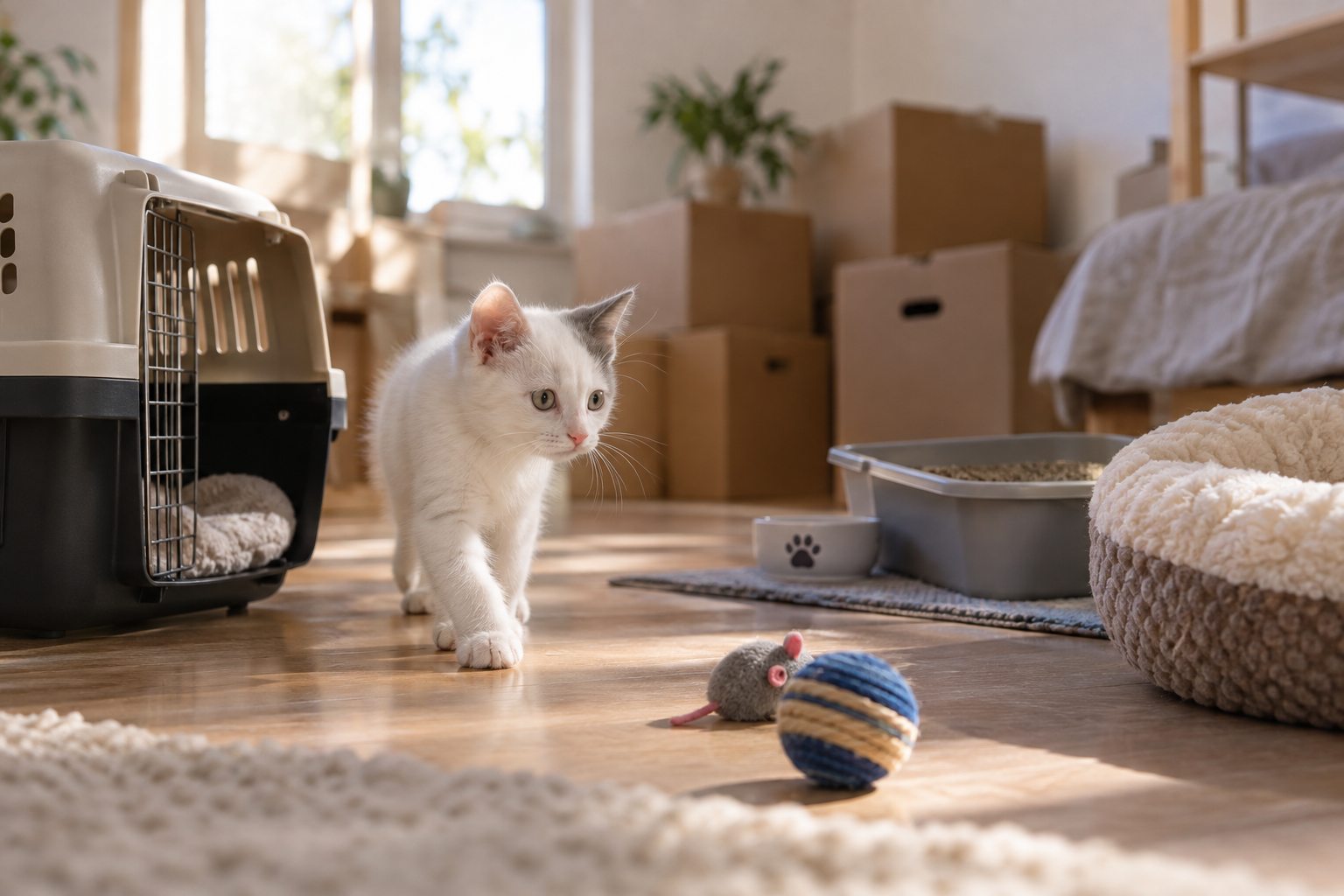
Start with one quiet room containing food, water, litter, and hiding spots; expand access as your cat relaxes.
A move brings new smells, sounds, and routes through the home. Even a confident cat may hide at first. The goal is to make the unfamiliar space predictable and allow your cat to choose when to explore.
Prepare a safe room
Set up a small quiet room before your cat arrives. Include a litter box away from food and water, a bed, a hiding place, a scratcher, and familiar blankets. Keep doors and windows secure. Let your cat leave the carrier when ready rather than pulling them out.
Visit calmly for short periods and keep feeding times consistent. Some cats come out quickly; others need several days.
Prepare one quiet room before the cat arrives. Include water, familiar food, a litter box set apart from meals, a scratching surface, comfortable bedding, and at least one hideaway. Let the cat leave the carrier on its own; some cats explore immediately, while others wait until the room is quiet. Keep the door closed initially so the new space is understandable rather than overwhelming. Check eating and litter use daily without pulling the cat from a hiding spot to prove it is comfortable.
Choose a room that people can enter calmly but that does not expose the cat to constant traffic. Avoid placing every resource beside a washing machine or where another pet can stare through the door. Familiar smells may help, but do not assume a scented product will solve stress. Predictability, choice, and safe access to essentials matter more.
Expand gradually
Once your cat eats, uses the box, and moves comfortably around the safe room, open access to another quiet area. Let the cat retreat to its base. Check for hazards such as open windows, toxic plants, and tight spaces behind appliances.
If other pets live in the home, use scent swapping and gradual, supervised introductions. Do not force face-to-face meetings. Give each animal separate resources.
Expand territory according to behavior, not a fixed number of days. A cat that eats, uses the litter box, grooms, and explores the starter room can investigate another small area while the safe room remains available. Open a door for a supervised period and allow retreat. If the cat freezes, hides for a long time, or stops eating, reduce the area again. Moving slowly is not a failure; it lets the cat build a map of the home without losing a secure base.
Check hazards before opening another room: loose cords, open windows, small objects, and inaccessible hiding spaces where retrieval would be difficult. Keep the carrier accessible as a familiar item if the cat is comfortable with it. For a shy cat, sit quietly and let it approach. Reaching into a hideaway can make the new room feel less safe.

Keep routines familiar
Use the same food and litter at first when possible. Offer regular play and quiet rest. Put scratching surfaces and perches in useful locations, not only in a hidden corner.
For an outdoor cat, keep them safely indoors while they learn the new home and discuss a suitable transition plan with your veterinarian or local welfare organization. Make sure identification details are updated.
Other pets require a separate introduction plan. Begin with separate spaces and scent exchange, then brief visual contact through a barrier when both animals are calm. Watch body language and do not rush to a face-to-face meeting because one short interaction went well. Provide multiple routes and resource locations so no animal can block another from food, water, or the litter box. A cat that must pass a dog to reach its box may avoid using it even when the dog appears friendly.
Keep the resident pet's routine steady too. Reward calm behavior and allow both animals to withdraw. If either pet becomes distressed, return to an easier stage. A qualified behavior professional can help with a difficult introduction. The goal is safe coexistence, which may take time and does not require immediate closeness.
Expand the home at the cat’s pace
- Quiet starter roomEating, litter use, resting, and voluntary exploration.
- One nearby areaThe cat can retreat and return without becoming overwhelmed.
- Wider access or pet introductionsResources stay accessible and every animal remains calm.
Appetite or urination trouble requires veterinary advice regardless of the moving timeline.
Watch for trouble
A cat who does not eat, strains in the litter box, vomits repeatedly, or seems weak needs veterinary advice. Stress can coincide with illness, so do not assume every change is emotional. Track eating and toileting during the first days.
Routine makes the unfamiliar home more predictable. Feed at consistent times, use the same food initially if possible, and keep the litter product familiar during the first days. Offer short play opportunities when the cat shows interest, then let it rest. Do not invite every visitor to meet the cat right away. Keep noise and handling modest. A new cat may need time to learn where people move, which doors open, and where it can retreat.
Monitor health separately from confidence. Note how much the cat eats, whether it drinks, and what appears in the litter box. A hiding cat can still need urgent help if it cannot urinate, and a cat that refuses food should not be left to adjust indefinitely. Call a veterinarian for concerning appetite, elimination, vomiting, or lethargy. Stress does not rule out illness.
Practical details
Why one room is an advantage
A whole house can be overwhelming when every smell and route is new. A starter room gives the cat a small territory where food, water, litter, and rest are easy to find. Place the litter box away from food and water, offer a covered hiding place, and make sure windows and doors are secure. Bring familiar bedding when possible. Let the cat leave the carrier voluntarily; pulling it out can make the room feel less safe.
Some cats investigate immediately, while others spend much of the first day hidden. Judge progress by eating, drinking, litter use, and relaxed exploration rather than a fixed timeline. Visit quietly and allow the cat to approach. Keep the room available as a retreat when access to the wider home begins.
A gentle first-week sequence
Prepare one secure room with litter, food, water, bedding, a scratcher, and hiding places.
Open the carrier and let the cat decide when to emerge; keep visits calm and brief.
Expand access only when the cat eats, toilets, and moves comfortably in the starter room.
Use separate resources and gradual scent-based introductions before supervised meetings.
Expand the map in stages
Once the cat is comfortable in the starter room, open a nearby area for short, supervised exploration. Check for hazards such as loose cords, toxic plants, open windows, and narrow spaces behind appliances. Let the cat return to the safe room. Avoid moving food, water, and litter repeatedly during the first days; predictable resource locations help.
If other pets live in the home, keep them separate at first. Exchange bedding scents and feed on opposite sides of a closed door if everyone remains calm. Move to visual introductions only when the animals are comfortable. A rushed meeting can create tension that takes longer to repair than a patient start.
Imagine a kitten that begins exploring the safe room on the first evening but hides when the hallway door opens. Keep the hallway closed for now and allow more time. Another cat quietly uses the room for several days, then ventures into one adjacent room and returns to its bed. Both are making progress at their own pace. Success is seen in eating, toileting, resting, and gradually broader exploration, not how quickly a cat accepts the entire home.
If you move with an existing cat, protect familiar objects through the transition. Bring known bedding, keep carriers safe, and avoid losing track of the cat while doors are open for movers. Check microchip and identification details according to your local arrangements. A secure settling space prevents a frightened escape and allows you to observe the cat before opening the rest of the home.
Know when adjustment is more than stress
A cat may hide after a move, but not eating, repeated vomiting, straining to urinate, weakness, or abnormal breathing requires veterinary advice. Keep a simple record of meals and litter visits. Do not assume every symptom is caused by the new environment. A veterinarian can decide whether a medical issue needs attention.
Update identification details and ensure the carrier remains a familiar, accessible object rather than appearing only for stressful trips. For an outdoor cat, discuss a safe transition with your veterinarian or local welfare organization before allowing outdoor access. The lasting goal is a cat that knows where to rest, hide, eat, and retreat when the home feels busy.
Review the setup after the first weeks. Is the litter box still in a place the cat can reach privately? Are there scratching and resting options beyond the starter room? Does another pet control a doorway or favorite perch? The environment can be adjusted as the cat's territory grows. Offer vertical and low resting choices, because a cat's preferences may change once it feels safer. Keep one familiar refuge available during future household disruptions.
Do not interpret a cat's reluctance to be held as failure to bond. Sitting nearby, offering play, and respecting withdrawal can build trust. If the cat remains persistently fearful or shows behavior or health changes, consult a veterinarian and consider qualified behavior support. A thoughtful transition follows the cat's behavior and protects its basic needs throughout.
Keep the first room available after the cat begins exploring. A cat may venture into a hallway and then need to return to familiar bedding and its known litter box. Do not treat a retreat as a setback. Continue offering food, water, and a quiet resting place there while the cat learns additional routes. If you change the location of resources, do so gradually and ensure the cat can always find an accessible option. In a multicat home, separate stations reduce the chance of silent blocking.
Ask everyone in the household to use the same gentle rules: no pulling the cat from hiding, no surprise visitors in the starter room, and no forced meeting with resident pets. Track meals and litter use during the transition. If those basics change, contact a veterinarian even if stress seems the obvious explanation. Good adjustment is shown by ordinary daily functions and increasing confidence, not a deadline for walking through every room.
Expand the new cat's territory gradually
Set up one quiet room with food, water, a litter box, a scratcher, and a hiding spot. Let the cat choose when to emerge. Sit nearby and offer gentle interaction without reaching into the hiding place. Once the cat eats, uses the box, and explores the room comfortably, open access to another small area. Keep the original room available as a safe base.
If other pets live in the home, exchange scent before face-to-face meetings and use barriers for brief, calm introductions. Do not rush because one meeting went well, and separate animals if either becomes overwhelmed. Keep resources in several locations so the new cat does not have to pass another pet to reach water or the litter box. Predictable routines make the unfamiliar home easier to understand.
A new cat may hide at first, but continuing refusal to eat, repeated vomiting, difficulty urinating, or marked lethargy requires veterinary advice. Track meals and litter use during the first days rather than relying on whether the cat seems shy. Offer play when the cat is ready, and let confidence grow at its own pace.
Continue exploring
For a broader routine, read How to Help Your Dog Stay Calm During Car Rides, How to Stop a Dog From Barking at Everything, and How to Teach a Dog to Settle on a Mat.
Frequently Asked Questions
How long does a cat take to settle in a new home?
Some settle in days; others take weeks. Progress is more important than a fixed deadline.
Should I let my cat explore the whole house immediately?
Most cats benefit from starting in a quiet room and expanding access gradually.
What if my cat hides after moving?
Provide a safe hiding place and monitor food, water, and litter use. Contact a veterinarian if hiding is persistent or paired with illness signs.
Editorial references
These resources informed the general guidance in this article. They do not replace advice tailored to your pet.
This guide offers general information. Your pet’s age, health, and history may call for a different plan. For medical concerns, ask your veterinarian.